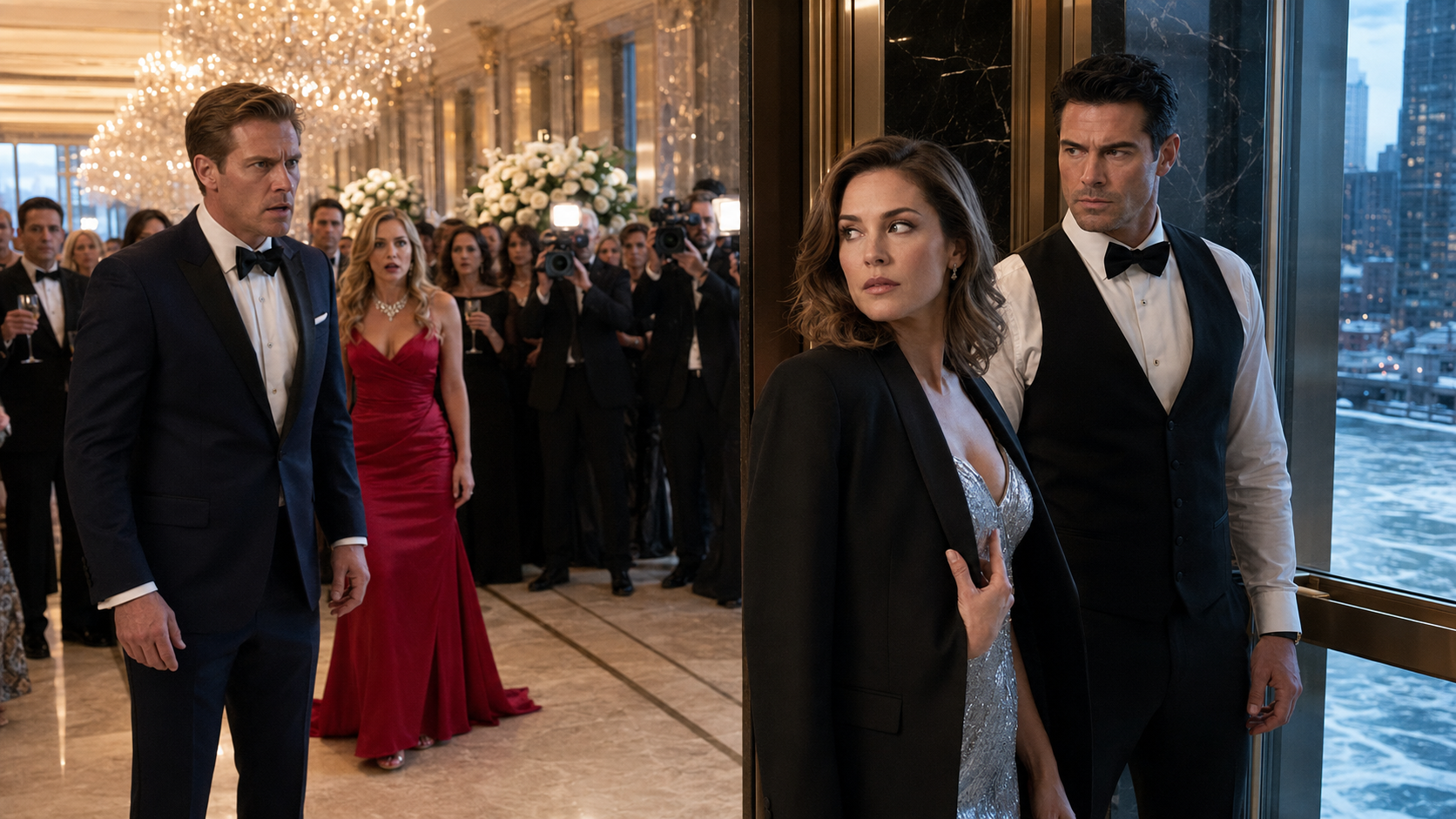


MY HUSBAND FIRED THE ONLY MAN WHO DEFENDED ME. ONE YEAR LATER, THAT MAN RETURNED AS THE OWNER OF HIS COMPANY—AND PUT MY NAME BACK ON EVERYTHING MY HUSBAND HAD STOLEN.
My husband fired his best executive because he caught him looking at me for three seconds too long.
One year later, that executive returned as the secret buyer of my husband’s company—and the man who was finally done pretending he felt nothing for me.
By then, I had discovered my husband’s mistress, the apartment he paid for with our company’s money, and the documents he had tricked me into signing so he could erase my ownership.
Marcus believed I would accept the house, take his allowance, and disappear quietly.
He had spent twelve years teaching me to doubt my own value. He thought one more signature would finish the job.
He was wrong.
Because when Rowan Blackwood walked back into my life, he did not offer to rescue me.
He placed the evidence in front of me, left the door open, and asked one question no man had asked me in years.
“What do you want, Lila?”
My answer cost Marcus his marriage, his company, and every lie he had built his name upon.
But the final truth was the one none of us expected.
Marcus had not fired Rowan because Rowan wanted me.
He had fired him because Rowan had discovered that my husband was already stealing my future.

PART ONE — THE NIGHT HE FIRED THE ONLY MAN WHO SAW ME
The tenth-anniversary gala for Whitmore Media was held inside a glass-walled venue overlooking the Hudson River.
Four hundred guests filled the room: investors, politicians, celebrities, editors, and executives who had spent the last decade praising my husband’s genius.
Every wall displayed one of our company’s most successful campaigns.
A fragrance advertisement featuring a woman standing alone in the rain.
A literacy campaign built around handwritten letters from children.
A national hospital campaign that had increased donor registrations by forty-three percent.
All three had begun in my notebooks.
None carried my name.
I stood beside Marcus beneath a wall of work I had created while he accepted congratulations for having the vision to make it possible.
My husband looked perfect in a midnight-blue tuxedo. His dark hair was carefully styled, his smile measured, and his hand rested on my lower back whenever a photographer came close.
From a distance, we looked like the couple business magazines described us as—the brilliant founder and the elegant wife who had supported him from the beginning.
The photograph never showed how tightly his fingers pressed into my spine when I tried to speak.
“Marcus, the hospital campaign was remarkable,” an investor named Daniel Price said. “How did you find the emotional center without making it sentimental?”
“I understand people,” Marcus replied.
I opened my mouth.
His fingers tightened.
“Lila helped with some of the early brainstorming,” he added, as though handing me a generous consolation prize.
I had written the entire campaign during the three weeks I spent sleeping in a chair beside my mother’s hospital bed.
My mother died before the first advertisement aired.
Marcus accepted an industry award for it six months later.
Daniel turned toward me. “What was your contribution?”
Before I could answer, Marcus laughed.
“My wife is being modest tonight. She’s much better at arranging dinners than discussing business.”
The men around us smiled because Marcus had smiled first.
I did not correct him.
That was the skill my marriage had taught me better than any other: how to absorb humiliation without making the room uncomfortable.
Across the ballroom, Rowan Blackwood stopped speaking.
He had been standing with two board members, a glass of untouched whiskey in his hand. His expression did not change, but his steel-gray eyes found mine through the crowd.
Rowan was Whitmore Media’s chief strategy officer and the only executive who never acted as if my ideas became less valuable when Marcus repeated them.
When Marcus interrupted me in meetings, Rowan returned the conversation to my point.
When Marcus called my proposals too emotional, Rowan arrived the next morning with data proving they would work.
And when the campaigns succeeded, Rowan said my name in rooms where my husband preferred it forgotten.
That night, the quiet recognition in his eyes felt unbearable.
I excused myself and walked onto the balcony.
February wind cut through my silver evening dress. Below me, headlights moved along the West Side Highway, each car carrying someone toward a life where they might still recognize themselves.
The balcony door opened behind me.
“If you stay out here much longer, you’ll freeze.”
Rowan’s voice was low and controlled.
“I needed air.”
“You needed to leave before you said what everyone in that room deserved to hear.”
I turned toward him. “And what was that?”
“That Marcus has never had an original idea he didn’t first hear from you.”
A painful laugh escaped me. “You shouldn’t say things like that.”
“Why?”
“Because he’s your employer.”
Rowan removed his black jacket.
When he offered it to me, I shook my head.
“My husband wouldn’t like that.”
Something cold moved through Rowan’s expression.
“Your husband doesn’t appear to like anything that reminds him other people can see you.”
The balcony door opened again.
Marcus stood beneath the light, smiling without warmth.
For a moment, no one spoke.
His gaze moved from Rowan’s jacket to Rowan’s face and then to me.
“You’re fired,” Marcus said.
I stared at him. “Marcus—”
“Stay out of this, Lila.”
Rowan did not beg. He did not apologize or attempt to turn the moment into a misunderstanding.
He stepped closer and placed the jacket around my shoulders without letting his hands touch my skin.
Only then did he face my husband.
“You’re firing me for offering your wife a coat?”
“I’m firing you because I know how you look at her.”
Rowan’s jaw tightened.
Marcus gave a short, triumphant laugh. “You think I haven’t noticed? Every meeting. Every dinner. Every time she speaks, you look at her as if she’s the only person in the room.”
I wanted Rowan to deny it.
Instead, his eyes moved briefly to mine.
“You should be more concerned about the way you don’t,” he said.
The cold air seemed to disappear from my lungs.
Marcus stepped forward. “She is my wife.”
“Then start treating her like one.”
Security arrived minutes later.
Rowan surrendered his access card without resistance. Before leaving, he stopped beside me.
“You deserve to stand in every room your talent built, Lila.”
His voice was soft enough that only I heard him.
Then he walked away.
Marcus spent the rest of the night telling people Rowan had become unstable. By morning, he had removed Rowan’s name from the company website and instructed legal counsel to enforce every confidentiality clause in his contract.
At home, Marcus poured himself a drink and accused me of encouraging the humiliation.
“I didn’t ask Rowan to defend me.”
“You didn’t stop him.”
“You fired your best executive because he gave me a jacket.”
“I fired a man who wanted my wife.”
There was something almost tender in his anger, and I mistook it for jealousy.
That was how thoroughly Marcus had confused possession with love.
I took Rowan’s jacket from my shoulders.
“I’ll return this to him.”
“No.”
Marcus took it from me and dropped it into the fireplace.
The flames climbed the black fabric while he watched my face.
“He is gone,” Marcus said. “And you are going to forget him.”
For the next year, I tried.
I stayed in my marriage.
I created five more campaigns Marcus claimed as his own. I attended dinners, smiled for photographs, and accepted the careful little corrections he made whenever my memories threatened the version of our life he preferred.
Marcus called Rowan obsessed.
Dangerous.
Disloyal.
I believed my husband because believing him felt less frightening than admitting the only man who had defended me was the one he had sent away.
Then, eleven months after the gala, I found a key inside Marcus’s office safe.
Attached to it was a silver tag engraved with one address:
17C, 440 ELEVENTH AVENUE.
And beside the key was a lease paid by Whitmore Media for an apartment registered to Vanessa Cole.
Marcus’s twenty-eight-year-old executive assistant.
PART TWO — THE APARTMENT PAID FOR WITH MY NAME
I went to the apartment the following afternoon.
I did not call Marcus.
I did not confront Vanessa or ask a friend to come with me.
Some truths require witnesses.
Others require silence so complete that the final lie has nowhere to hide.
The apartment overlooked the Hudson from the seventeenth floor. It had white marble counters, custom furniture, and the sterile beauty of a place selected by someone who thought money could substitute for intimacy.
A framed photograph stood on the living room shelf.
Marcus and Vanessa were kissing beside the Seine in Paris.
The date printed on the corner was September eighteenth.
My wedding anniversary.
Marcus had told me he was attending an investor conference in London.
I had eaten dinner alone in our townhouse while the white roses I ordered for us slowly opened between two empty plates.
In the bedroom closet, I found dresses in Vanessa’s size, men’s shirts from Marcus’s tailor, and a black garment bag containing the gown I had wanted for my thirty-sixth birthday.
Marcus had called it too expensive.
A month later, he had bought it for her.
The diamond earrings he claimed were being repaired lay inside a velvet box on the dressing table.
They had belonged to my mother.
That hurt more than the photograph.
The affair was a betrayal of our marriage.
The earrings were a theft from the dead.
I placed them in my handbag and continued searching.
Inside a desk drawer, I found documents bearing my signature.
They transferred nearly all my remaining shares in Whitmore Media to a holding company controlled by Marcus.
I recognized the date.
He had placed those pages between foundation papers after my mother’s memorial benefit and told me they concerned a charitable grant.
I had signed without reading them.
I had trusted my husband while still wearing the black dress from my mother’s funeral.
The front door opened.
Marcus entered first.
Vanessa followed him, carrying two glasses and a bottle of champagne.
They stopped when they saw me.
Vanessa’s face lost its color.
Marcus merely looked irritated.
“You shouldn’t be here,” he said.
I held up the photograph from Paris. “How long?”
“Lila—”
“How long?”
Vanessa looked at Marcus, waiting for instructions.
He removed his coat with deliberate calm.
“Almost two years.”
The answer entered me like cold water.
No screaming.
No dramatic collapse.
Only the quiet death of every memory I could no longer trust.
“You took her to Paris on our anniversary.”
“Our marriage had been over for a long time.”
“That would have been useful information for your wife.”
“You knew we were unhappy.”
“I knew you were cruel. I didn’t know you were unfaithful.”
His eyes hardened. “Don’t become theatrical.”
I placed the share transfers on the counter.
“You stole my ownership.”
“You signed those documents.”
“You lied about what they were.”
“That isn’t theft. That is carelessness.”
Vanessa shifted near the doorway.
Marcus poured himself champagne.
“We were going to discuss everything after the sale.”
“What sale?”
For the first time, a flicker of uncertainty crossed his face.
I looked at Vanessa.
“What sale?”
She lowered her eyes.
Marcus set down his glass. “Whitmore Media is being acquired.”
“By whom?”
“That doesn’t concern you.”
“My mother invested five million dollars in this company. I created the work that built its reputation. How does selling it not concern me?”
“Because you no longer own enough stock to block the transaction.”
His answer came easily.
He had rehearsed it.
Marcus explained that after the sale, I would keep our townhouse and receive a monthly allowance. In return, I would sign a noncompete agreement, surrender any claim to the company, and remain publicly silent about his relationship with Vanessa.
“You’ve planned my disappearance,” I said.
“I’ve planned a dignified transition.”
“For you.”
“For everyone.”
He crossed the room.
“You haven’t worked independently in twelve years, Lila. You have no clients, no public portfolio, and no professional identity outside my company.”
“Our company.”
His smile was almost pitying.
“You signed that away.”
The words should have broken me.
Instead, they made everything inside me become still.
Marcus had mistaken my patience for surrender because he had never understood the difference.
I picked up the documents.
“I want copies of every transfer.”
“No.”
“I want the purchase agreement.”
“No.”
“And I want my mother’s earrings returned.”
Vanessa touched her ears instinctively, although the earrings were already in my bag.
Marcus’s expression changed.
“You went through her belongings?”
“Anything bought with our money is not hers.”
“You’re embarrassing yourself.”
“I’m the only person in this room who should not be embarrassed.”
A knock sounded at the open door.
Two attorneys stood in the hallway.
Behind them was Rowan Blackwood.
For one dangerous second, I forgot how to breathe.
He looked harder than he had a year earlier. His dark hair was shorter, his shoulders broader beneath a charcoal coat, and whatever warmth once softened his face had been carved into something disciplined and unreadable.
His eyes found me first.
Then he saw the papers in my hand, the photograph on the counter, and Marcus standing too close.
“Step away from her,” Rowan said.
Marcus laughed in disbelief. “What are you doing here?”
“This property belongs to Blackwood Residential. My counsel scheduled an inspection of all Whitmore-funded assets before the acquisition closes.”
I looked at him. “Blackwood?”
Rowan’s gaze remained on Marcus.
“Blackwood Global is the buyer.”
The man my husband had fired had spent the previous year building an investment and media group from three failing agencies abandoned by larger corporations.
Employees left Whitmore Media to join him.
Clients followed.
Then Whitmore’s rapid expansion collapsed beneath concealed debt, and Rowan quietly purchased the loans Marcus could no longer repay.
If the sale closed, Rowan would control Whitmore Media.
Marcus tried to recover his confidence.
“This is a private matter.”
“You paid for the apartment with company money,” Rowan replied. “That makes it part of my due diligence.”
His attorney handed me a folder.
Inside were copies of my stock transfers, the apartment payments, expense reports for Paris, and an early draft of the acquisition agreement.
A section labeled KEY PERSON RETENTION listed my name.
Marcus had promised the buyer that I would remain as the company’s public creative ambassador for three years.
He had sold my work, taken my shares, and included my face in the transaction.
I looked up at Rowan. “Did you agree to this?”
“No.”
He opened the final version.
The section had been crossed out in black ink.
Beside it, Rowan had written:
LILA WHITMORE IS NOT AN ASSET BEING ACQUIRED.
Marcus’s face darkened. “You’re destroying a two-hundred-million-dollar deal because you’re still obsessed with my wife.”
“No,” Rowan said. “I’m pausing it because you obtained controlling shares through fraud.”
He placed another document on the counter.
It was the original Founder Protection Agreement my mother had required when she invested in Whitmore Media.
I had not seen it in years.
The clause on page forty-two stated that if company funds were deliberately concealed for personal use—or if one founder obtained another founder’s shares through material deception—the transfers would be suspended pending independent review.
My voting rights would immediately return.
Marcus stared at the page.
“That clause was removed.”
“From the copy you kept,” Rowan said. “Not from the version filed with the trust.”
My mother had known enough about powerful men to make certain one signature could not erase her daughter.
Marcus turned toward me.
“Lila, give us the room.”
I almost laughed.
Rowan did not move closer.
He did not reach for me or tell Marcus I was leaving with him.
Instead, he looked directly into my eyes.
“This sale does not close without your vote now,” he said. “I can take you somewhere safe, leave my attorneys here, or walk out and wait downstairs.”
He placed the decision in front of me without touching it.
“What do you want?”
Marcus answered for me.
“She wants to go home.”
For twelve years, he had chosen my seat, my clothes, my public statements, and the amount of truth I was permitted to remember.
I stepped around him.
Then I stopped beside Rowan.
“I want every record he tried to hide.”
Rowan’s expression did not change, but something fierce moved behind his eyes.
“You’ll have them.”
“And I want him removed from the apartment.”
Marcus stared at me. “Excuse me?”
I placed the lease on the counter.
“The apartment is a company asset. Until the independent review is complete, you have no right to use it.”
Rowan glanced at his attorneys.
One of them made a call.
Marcus came toward me and reached for my arm.
Rowan caught his wrist before he touched me.
The movement was fast, precise, and controlled.
“Do not touch her.”
“She is my wife.”
Rowan’s fingers tightened.
“She said she wants you gone.”
“You think she belongs to you now?”
Rowan looked back at me before answering.
“No. She belongs to herself.”
Then his gaze returned to Marcus.
“And that is the fact you should have learned before teaching her how much better her life could become without you.”
PART THREE — THE MAN WHO BOUGHT THE DOOR BUT LEFT IT OPEN
I did not leave the apartment because Rowan ordered me to.
I left because I chose to.
That distinction mattered.
Rowan arranged a suite at a hotel owned by one of his companies, but he gave the key to his female attorney, Maya Torres, and stayed outside while she walked me upstairs.
He did not ask to come in.
He sent no midnight confession and made no attempt to turn my husband’s betrayal into his opportunity.
The next morning, three boxes arrived.
They contained every campaign proposal I had submitted to Whitmore Media, including early drafts with dates, handwritten notes, and internal messages proving I had created the company’s most valuable work.
Marcus had deleted those records from my office.
Rowan had preserved them.
I called him.
“How long have you had these?”
“Since the night I was fired.”
“Why?”
“Because I knew Marcus would remove anything that contradicted the story he told about you.”
I looked at the boxes.
“You expected this to happen?”
“I expected him to erase more than your name.”
His voice changed.
“There is something else you need to know.”
Rowan arrived forty minutes later with Maya.
He remained standing until I invited him to sit.
Then he placed a single document on the table.
It was another stock transfer, dated the night of the anniversary gala.
My signature appeared at the bottom.
“I never signed this.”
“I know.”
“How?”
“You were on the balcony with me at the time the document was electronically submitted.”
My eyes lifted to his.
Rowan explained that before the gala, he had discovered unusual transfers into a shell company called MWC Holdings. When he questioned Marcus, Marcus claimed I had approved them.
Rowan requested the original authorization.
Three hours later, Marcus saw him place his jacket around my shoulders and fired him in front of four hundred people.
“That wasn’t why he fired you,” I said.
“It was the excuse.”
“He thought you had discovered the fraud.”
“Yes.”
Pain moved through me, sharp and humiliating.
For a year, Marcus had convinced me that Rowan’s feelings caused the destruction of their professional relationship.
In reality, my husband had used jealousy to hide a crime.
“Why didn’t you tell me?”
“I tried.”
“When?”
“The morning after the gala. Marcus had your number changed and instructed security not to let me near the townhouse. Every letter I sent was returned by his legal department.”
He opened a second folder.
Inside were copies of six letters.
All addressed to me.
All unopened.
Marcus had not simply removed Rowan from the company.
He had controlled the evidence that could have awakened me.
I looked toward the hotel windows.
“You could have gone public.”
“With accusations I couldn’t prove? Marcus would have buried the story, destroyed the employee who gave me the records, and convinced you I was retaliating because I wanted you.”
“You did want me.”
The room went silent.
Maya stood. “I’ll be outside.”
When the door closed, Rowan did not look away.
“Yes.”
The answer carried no apology.
“For how long?”
“Long enough to know wanting you never gave me the right to interfere with your choices.”
“You challenged my husband.”
“I challenged what he did to you.”
“Is there a difference?”
“There has to be.”
Rowan leaned forward, his forearms resting on his knees.
“I will destroy Marcus in a boardroom if the evidence allows it. I will put every share he stole back in your name. I will make him answer for using your work, your inheritance, and your trust.”
His voice became quieter.
“But I will not use your pain to make you choose me.”
Something inside me cracked—not from pressure, but from the absence of it.
Marcus had always presented obedience as proof of love.
Rowan was offering freedom even when that freedom might take me away from him.
“I don’t need a savior,” I said.
“I know.”
“I need an attorney, a forensic accountant, and access to my own records.”
“They’re waiting downstairs.”
“And if I decide not to sell the company to you?”
“Then I lose the acquisition.”
“You would accept that?”
His gaze held mine.
“I would rather lose the company than become another man who profits from taking away your choice.”
For the next four days, I worked with Rowan’s team.
We traced the apartment payments, private flights, luxury gifts, and consulting fees Marcus had paid Vanessa for work she had never performed.
We found twenty-three million dollars in concealed debt.
We found forged board authorizations.
We found that Marcus had pledged my stolen shares as security for a loan.
Worst of all, we found a private presentation he had shown potential buyers.
One slide described me as an “underleveraged brand asset.”
Marcus had assigned a market value to my public image.
He believed even my silence could be sold.
On the fifth morning, Rowan placed an employment agreement in front of me.
Chief Creative Officer of the combined company.
Fifteen percent equity.
A board seat.
Full authority over every creative division.
I read it and pushed it back.
His eyebrows lifted. “No?”
“Twenty-five percent.”
“That is aggressive.”
“So is buying a company with my work inside it.”
A corner of his mouth moved.
I continued.
“My name returns to every campaign I created. Employees affected by Marcus’s financial misconduct keep their positions. The company establishes an independent ethics board, and I retain approval over the new name.”
“Anything else?”
“Marcus is removed before I enter the building.”
Rowan studied me for several seconds.
“Done.”
“You agreed too quickly.”
“I knew you would ask for more than I offered.”
“Then why didn’t you offer twenty-five percent first?”
“Because I wanted to know whether you still remembered how to negotiate.”
For the first time since entering Vanessa’s apartment, I smiled.
It was small and painful.
But it belonged entirely to me.
PART FOUR — THE BOARDROOM WHERE HIS LIES RAN OUT
Marcus arrived at the emergency board meeting expecting to win.
He wore a dark suit, brought six attorneys, and entered Whitmore Media’s conference room with Vanessa on his arm.
Vanessa wore my mother’s diamond earrings.
She had taken them back from the townhouse while I was staying at the hotel.
The cruelty was deliberate.
Marcus had always believed anger made women careless.
I looked at the earrings once and then took my seat.
Rowan sat at the head of the table as representative of the company’s largest secured creditor. The chair to his right had been reserved for me.
When I entered, he stood and pulled it out.
Marcus laughed.
“You’ve been waiting a year to put her there.”
Rowan’s expression remained cold.
“No. She should have occupied it from the beginning.”
The meeting opened with Marcus’s attorney accusing Rowan of using the acquisition to pursue a personal relationship with me.
Photographs appeared on a screen.
Rowan entering my hotel.
Rowan leaving two hours later.
Rowan and me standing beside a car.
The images had been taken by investigators Marcus hired before I discovered the affair.
Marcus looked at me with manufactured sadness.
“He has manipulated my wife during an emotional crisis.”
I did not defend Rowan.
I did not need to.
Instead, I turned toward the board.
“The man accusing me of an affair spent twenty-two months using company funds to maintain an apartment for his mistress.”
Maya displayed the lease.
Then came the hotel receipts, Paris photographs, jewelry purchases, private flights, and Vanessa’s consulting agreement.
Marcus’s confidence began to thin.
He called the expenses legitimate business development.
The forensic accountant demonstrated that Vanessa had billed the company during vacations, weekends, and two weeks when she was photographed on a yacht in Greece.
Marcus called the stock transfers valid.
A document examiner identified four forged signatures.
Digital records showed one transfer had been submitted while I was standing on the gala balcony in front of Rowan and two security cameras.
Marcus turned toward Vanessa.
“Tell them Lila authorized everything.”
Vanessa did not answer.
For the first time, I noticed how tightly she held her handbag.
Marcus repeated himself.
“Tell them.”
Vanessa slowly removed my mother’s earrings.
She placed them on the conference table.
“I’m done lying for you.”
Silence spread around the room.
Marcus stared at her.
Vanessa opened her handbag and produced a flash drive.
After the apartment confrontation, she had discovered that Marcus intended to blame the concealed payments and forged documents on her.
He had created emails using her account, copied her signature onto loan guarantees, and prepared termination papers accusing her of embezzlement.
She had never been his future wife.
She had been his next shield.
Vanessa did not apologize to me.
She knew an apology would not return the years she had helped him steal.
But she gave the board every message, recording, and hidden document she possessed.
One recording captured Marcus speaking to an investment banker.
“Lila won’t be a problem,” he said. “She hasn’t made a decision without me in twelve years. Once the sale is done, she’ll sign whatever I put in front of her.”
Another voice asked about Rowan.
Marcus laughed.
“Blackwood thinks he’s buying my company. What he really wants is my wife. Let him have the illusion. By the time he realizes Lila can’t function without me, I’ll have his money and she’ll come home.”
The recording ended.
No one looked at me.
Perhaps they expected humiliation.
I felt none.
Marcus’s contempt no longer had the power to define me.
It was merely evidence.
Rowan presented the Founder Protection Agreement.
Because Marcus had concealed company funds and acquired my shares through material deception, my voting rights had been restored pending final adjudication.
Combined with Rowan’s creditor position and the votes of three independent directors, we controlled the board.
Marcus stood.
“This company exists because of me.”
I opened the first campaign notebook I had ever kept.
“No. This company exists because my mother financed it, I created its work, and hundreds of employees built what you spent years calling yours.”
“You were my wife.”
“I was your partner.”
“You would have nothing without my name.”
I looked around the conference room.
Nearly every campaign displayed on its walls had begun in my handwriting.
“Your name became valuable because you placed it on my ideas.”
His face reddened.
“You think Blackwood is different? Men like him don’t spend hundreds of millions without expecting to own everything they save.”
I turned toward Rowan.
He did not answer for me.
He waited.
That mattered more than anything he could have said.
I returned my attention to Marcus.
“Rowan did not save me.”
The words surprised everyone except him.
“He showed me the door. I chose to walk through it.”
The board voted.
Marcus was removed as chief executive, stripped of operational authority, and referred for independent investigation.
His concealed transfers were frozen.
The sale was restructured under the terms I had negotiated.
When the vote ended, security entered the room.
Marcus looked from the guards to Rowan and then to me.
“You planned this together.”
“No,” I said. “You planned it every time you mistook my trust for stupidity.”
I removed my wedding ring.
For twelve years, Marcus had treated it as proof that I belonged to him.
I placed it on top of the fraudulent transfer documents.
“I loved you,” I said. “That was never evidence that I was weak. It was evidence that you were trusted.”
Something uncertain appeared in his face.
Not remorse.
Fear.
“You’re going to regret humiliating me.”
“I regretted protecting you.”
He came toward me and reached for my hand.
I stepped back.
“No.”
Rowan moved between us before Marcus could touch me.
“Her answer was no.”
“She can speak for herself,” Marcus snapped.
“She already did.”
Rowan glanced over his shoulder.
“If you want me to move, Lila, I will.”
I could have asked him to step aside.
Instead, I placed my palm against the back of his jacket.
“Stay.”
Something dark and protective moved through his eyes.
His arm settled around my waist, firm enough to reassure me and loose enough for me to leave.
Marcus stared at his hand.
“You’ve wanted to do that since the night I fired you.”
“Every day,” Rowan said.
Marcus’s expression twisted with satisfaction, as if the confession proved he had been right.
Then Rowan continued.
“But wanting her never gave me the right to steal her choices. That is the difference between us.”
Security escorted Marcus from the boardroom.
At the elevator, he looked back at me.
“You will come home when Blackwood gets tired of playing hero.”
The doors began to close.
“I’m not leaving you for Rowan,” I said.
Marcus smiled bitterly.
I held his gaze until only a narrow strip of his face remained visible.
“I’m leaving you for me.”
PART FIVE — THE MAN WHO WAITED FOR MY ANSWER
The divorce papers were filed the following morning.
Marcus fought every request.
He leaked stories accusing Rowan and me of carrying on a secret affair. He claimed I had manipulated the board and stolen the company he built.
But investigators found the forged transfers, concealed debt, unauthorized expenses, and falsified loan guarantees.
Whitmore Media’s board referred the evidence to federal prosecutors.
Clients began leaving.
Investors who once praised Marcus’s instincts stopped returning his calls.
The company he had used to make himself powerful became the witness that exposed him.
I spent the following three months rebuilding it.
The first change I made was removing Marcus’s name from the lobby.
The second was placing the creators’ names on every campaign.
The third was restoring the jobs of employees Marcus had dismissed for questioning him.
Rowan never entered my office without knocking.
He never treated our late-night meetings as dates or used his financial position to make me feel indebted.
Sometimes I caught him watching me across the conference room with the same intensity Marcus had noticed at the gala.
But now, when I met his eyes, he looked away first.
Not from shame.
From restraint.
One rainy evening, after the final divorce settlement was signed, I found Rowan waiting outside the courthouse.
Reporters surrounded the steps.
Marcus emerged behind me, pale with anger.
The court had returned my remaining shares, awarded me the townhouse, and ordered him to reimburse millions in misused marital funds.
His personal holdings had been frozen as the fraud investigation continued.
Rowan stood one step below me.
Not in front.
Not close enough to touch.
A reporter shouted, “Mrs. Whitmore, are you and Rowan Blackwood together?”
Before I could answer, Marcus pushed through the crowd.
“Lila.”
I continued walking.
He caught my wrist.
Rowan’s face changed instantly.
He removed Marcus’s hand from me and stepped between us.
“Touch her again,” he said quietly, “and the criminal investigation will be the least urgent problem in your life.”
Marcus stared at him. “There it is. The man who pretended he didn’t want another man’s wife.”
“I never pretended.”
Rowan’s voice remained calm.
“I wanted her safe. I wanted her free. And I wanted her long before you taught her that being loved meant becoming smaller.”
Marcus looked at me.
“She will never belong to you.”
Rowan did not hesitate.
“You’re right.”
His answer confused Marcus.
Then Rowan turned completely toward him.
“She belongs to herself. You had her loyalty and wasted it. You do not get her future, her fear, or one more inch of her space.”
A black car waited at the curb.
Rowan opened the rear door but did not tell me to enter.
He offered his hand.
“Where do you want to go, Lila?”
I looked back at Marcus.
He stood alone beneath the courthouse columns, surrounded by reporters shouting questions about fraud, forgery, and the company that no longer carried his name.
Then I placed my hand in Rowan’s.
“Home.”
He took me to the West Village townhouse.
The locks had been changed. Marcus’s belongings had been removed under court supervision, and my sister had filled the kitchen with food and white flowers.
Rowan stopped at the front steps.
“You aren’t coming inside?” I asked.
“Do you want me to?”
I looked through the windows.
For twelve years, that house had been the place where I measured my words, softened my ambitions, and apologized for occupying rooms I had paid for.
Part of me wanted Rowan beside me.
Another part feared replacing one powerful man with another before I had learned how to stand alone.
“I don’t know.”
He nodded.
“Then I’ll wait until you do.”
No disappointment.
No pressure.
He placed the new key in my palm and stepped back.
“Rowan.”
He stopped.
“Was Marcus right about anything?”
“Very little.”
“Did you build Blackwood Global to destroy him?”
His expression became thoughtful.
“At first, I built it because being fired reminded me I had spent too long helping an unworthy man become powerful.”
“And later?”
“I bought Whitmore’s debt because I found the transfer with your forged signature.”
“You risked everything for evidence that might not have been enough.”
“Yes.”
“Why?”
His eyes held mine.
“Because I could survive losing the money.”
The cold night moved between us.
“I could not survive knowing I had the chance to give you back your name and chose not to take it.”
I descended one step.
“I cannot be your reward for defeating Marcus.”
“I know.”
“I won’t move from his control into your protection.”
“I know that too.”
“And if you ever make a decision for me—”
“You leave.”
His answer was immediate.
“No argument. No punishment. No locked door.”
I moved closer.
“What happens if I don’t choose you?”
The pain in his face was brief but honest.
“Then I make sure the company is stable, honor every term you negotiated, and stay wherever you ask me to stay.”
I believed him.
Not because he had spent millions purchasing my husband’s debt.
Not because he had stood between Marcus and me.
I believed him because he had possessed the power to pressure me and had chosen restraint every time.
“Take me to dinner tomorrow.”
Rowan went completely still.
“Dinner?”
“One dinner.”
“As your business partner?”
“As the man who burned his jacket because my husband destroyed the first one.”
A slow smile appeared.
“I didn’t burn it.”
“What?”
“I recovered it from the fireplace after you went upstairs.”
“You kept a half-burned jacket for a year?”
“It was expensive.”
“That is the least convincing explanation you’ve ever given me.”
His smile deepened.
“Seven o’clock?”
“Seven.”
“I’ll arrive at six fifty-five.”
“Seven, Rowan.”
“Seven.”
I turned toward the door.
“Lila?”
I looked back.
The humor had left his face.
“I don’t want to claim you.”
His voice was quiet and certain.
“I want to be chosen by you.”
WARM CONCLUSION — THE LIFE I SIGNED WITH MY OWN NAME
One dinner became two.
Two became Sunday walks through Central Park, late meetings that ended with terrible coffee, and quiet mornings when Rowan left breakfast outside my office without assuming he was invited in.
I did not heal beautifully.
Some nights, I missed the man I thought Marcus had been.
Some mornings, I woke with his voice inside my head, telling me I had no value without his name.
Rowan never ordered me to forget.
He never used Marcus’s cruelty to make himself appear kinder.
He simply remained where I allowed him to remain.
Six months after the divorce, the company completed its restructuring.
I sold part of my restored stake to establish a fund for employees harmed by Marcus’s misconduct.
Vanessa testified in the fraud investigation and returned everything purchased with company money.
We did not become friends.
Her cooperation did not erase her choices, and my forgiveness was not a reward she was entitled to receive.
Marcus eventually accepted a plea agreement involving fraud, forgery, and unlawful asset concealment.
He lost his executive position, most of his remaining shares, and the reputation he had spent years protecting at everyone else’s expense.
The company became Hart House Creative, named for my mother.
Its first campaign under my leadership featured women who had rebuilt careers after being told they were too old, too emotional, too difficult, or too late.
The campaign carried one sentence:
YOUR NAME STILL BELONGS TO YOU.
One year after the board vote, I stood beneath that message at our relaunch gala.
This time, my name appeared on the wall.
Rowan remained at the back of the room while reporters interviewed me.
He had learned that protecting me did not require standing in front of me.
Sometimes it meant giving the world an unobstructed view of the woman I had become.
I found him on the balcony where everything had begun.
He held a black jacket over one arm.
“You brought another expensive coat near me?” I asked.
“I’m accepting the risk.”
He placed it around my shoulders only after I nodded.
Below us, the Hudson reflected a thousand pieces of light.
“I have something for you,” he said.
“If it’s a ring, I’m throwing you over the railing.”
“It’s a legally concerning response, considering the number of witnesses inside.”
“You own excellent attorneys.”
“I own one fewer company than everyone believes.”
He handed me a folder.
Inside was the final transfer agreement for his controlling interest in Hart House Creative.
The shares were being transferred into a trust controlled by me and the employees.
I stared at the pages.
“What is this?”
“The last condition of the acquisition.”
“I never negotiated this.”
“No. Your mother did.”
Rowan showed me an undisclosed amendment to the Founder Protection Agreement.
If fraud by one founder forced a sale, any buyer who relied on the protection clause could hold the controlling shares only until the injured founder was legally restored.
After that, control had to be offered back to her at the original acquisition price—not its new market value.
My mother had not merely protected my shares.
She had protected my right to reclaim the entire company.
“Did you know?” I whispered.
“From the beginning.”
“You bought Marcus’s company knowing you would have to offer it to me?”
“It was never Marcus’s company.”
“Why didn’t you tell me?”
“Because I needed your decision to be about what you wanted—not what you thought you owed me.”
I looked through the glass walls at hundreds of employees celebrating beneath my mother’s name.
Marcus had believed Rowan returned to steal his empire.
The truth was far more devastating.
Rowan had purchased it so Marcus would have to watch me take it back.
I signed the transfer.
Not as Marcus’s wife.
Not as Rowan’s reward.
As Lila Hart Whitmore—the woman whose name had survived every attempt to erase it.
Then I turned toward Rowan.
“What happens to our partnership now?”
“That is your decision.”
“And if I choose to keep you?”
His eyes darkened.
“In the company?”
I closed the folder.
“In my life.”
For once, Rowan Blackwood had no carefully controlled answer.
I stepped closer until there was only an inch between us.
“May I kiss you?” he asked.
Even then, he waited.
“Yes.”
His hand settled at my waist as I closed the final distance myself.
My husband had fired Rowan for looking at me as though I mattered.
He believed removing Rowan would make me easier to erase.
Instead, Rowan returned with the records, the money, and the patience to hold open the door I had been too frightened to see.
But he never carried me through it.
I walked through on my own.
Marcus lost his marriage, his title, and the company he had built from my ideas.
Rowan gained none of those things by force.
He gained my trust because he understood the truth Marcus never learned:
A woman is not yours because you married her.
She is not yours because you saved her.
She is not yours because you love her more fiercely than anyone else ever has.
She belongs to herself.
And if she reaches for your hand after reclaiming everything that was stolen from her, you do not call it ownership.
You call it being chosen.