








Fiction: This is an original fictional story. Characters and events are invented.
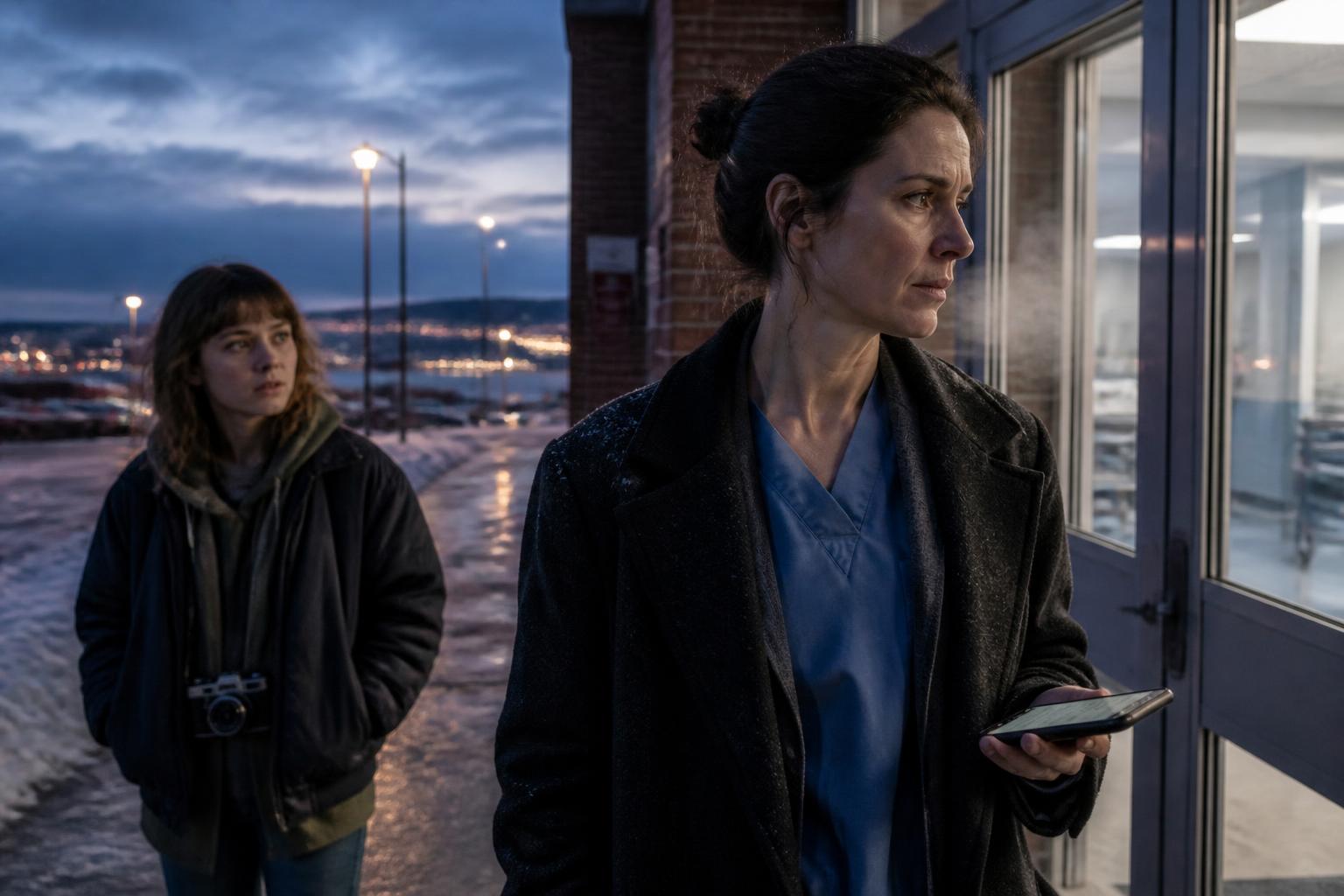
Margot Wallace pressed her palm against the emergency room’s old glass exit door, letting the December chill bite past her coat as she shoved outside. Laundry-gray clouds hung low over Lake Superior and the whistle of wind off the water made her grit her teeth. She’d lost count of how often she’d left St. Annabeth’s ER half-dazed: the muddled smell of bleach and hand sanitizer, the squawk of overhead pagers, the clipped panic of someone’s tragedy that wasn’t quite her own. She rotated shifts, juggled overtime, and more and more felt she gave her best hours to a place that would never know her, not really.
The downtown lights were flickering on, dulled by the thick air. Margot’s phone buzzed: a single word from her mother—“Dinner.”
She shook her head. Her mother, Iris, was never the texting type, but since her stubborn spell of forgetfulness began last fall, Margot had found herself on edge, waiting for the next half-finished sentence, the misplaced word, the trail of crumbs that might mean something was slipping.
She drove along Sixth Avenue East, trusting her hand in the turns even as her head ached. Iris’s old Victorian was tossed in the colorless autumn glow, pale blue with chipping trim. Inside, the house had a lived-in sort of cheer, the dining table crowded by mismatched plates and silverware, the air warm from the humming radiator. Iris bustled in the kitchen, her hands wrapped around a too-large casserole dish, humming under her breath. Margot caught a flicker in her movements—a hesitation, casserole tilting as Iris reached for the oven mitt she’d just set down. Margot stepped in, catching her mother’s gaze: a flash of recognition, then uncertainty.
At the table, Iris served bland tuna noodle casserole, punctuating the silence with mismatched pearls of memory. “Did I tell you about the Bakker boy’s engagement? You remember, Margot, how you used to babysit his little sisters?” Margot nodded, massaging her temples, but Iris’s story trailed into a muddle of names and years. Zoe, perched at the end of the table with her ever-present camera hanging from her neck, said nothing, clicking through her phone photos—windowsill frost, stray cats in the alley, the lake in all its steel-blue moods.
Later that night, finding herself alone in Iris’s attic as snow rattled at the panes, Zoe tugged a plastic bin closer. She was meant to be retrieving extra blankets, but the lure of the attic’s half-lit sprawl kept her longer—a jumble of childhood holiday boxes, Elijah’s old field guides and faded Christmas cards, a smell of dust and mothballs and time. She pressed aside a musty curtain and, on impulse, thumbed open a warped family portrait frame. Behind the photo, wedged between cardboard and wood, she found an old black-and-white print: a lakeshore at dusk, the sky agitated with clouds, a shape just visible on the dock—a silhouette, young, impossible to identify, with hair flying back in the wind.
No names, no date. The image unsettled her—she’d combed through family albums before, but this was unfamiliar, secret. She slipped the print into her pocket and, out of habit, took a quick photo of the attic before shuffling back down the narrow stairs.
She waited until the dishes were done and Iris, exhausted, had gone up to bed. Margot was sorting through the untouched mail at the kitchen counter, face drawn, when Zoe set the photograph in front of her. “This was behind the old lake house portrait,” Zoe said. “You know this place?”
Margot stilled. The air seemed to contract. She knew the trees—spindly birches bent by weather, shoreline rocks lacquered with ice. She knew the angle, too; the dock in the photo was the same battered planks where she and Elijah had once fished at dawn, where she’d first fallen off the side into the spring melt as a child. Their old cabin, the one they’d had to sell after her father died, in a sliver of woods so far up the North Shore locals said even the deer looked lost. She hadn’t seen that place in over a decade, hadn’t wanted to.
“That’s our cabin,” Margot murmured. Her chest tightened with something like longing, or regret. She flipped the photo, hoping for a signature, a date—nothing.
Zoe’s eyes were bright and serious. “Why was it hidden?” she asked. But Margot didn’t have an answer. The cabin was supposed to be gone, sealed in the past with the rest of the things they couldn't keep. But the photograph, unsigned and secret, gnawed at her. For the first time in years, she found herself wanting to drive north again—to the empty woods, to whatever else they’d left behind.
By Friday evening, the city’s usual drum of sleet turned to a light, silvery snow. Margot tossed her duffel in the back of the Outback, watching her breath snake out in the headlights as Zoe snapped a few last shots of tire treads winding down the alley. Abe arrived just as they were tucking a thermos of coffee into the cupholder—his beard dusted with snow, his smile a grounding warmth Margot didn’t realize she missed.
“Ready to play bodyguard for the Wallace women?” Margot asked, eyebrow raised. He laughed, ruffling a hand through his hair.
“More like chauffeuring your curiosity,” Abe said. “But I’ll take it. Got chains in the trunk if the roads get ugly.”
Zoe tucked herself in back, camera poised between her knees. The first twenty miles out of Duluth were all half-lit trees and radio static, each mile further from the city prying up old memories between them all—Elijah’s off-key singing, Iris’s rambles about the history of the North Shore, the way summer always seemed brighter at the cabin. Margot tried to keep her focus on the road, though her mind kept slipping to the photo—its ghostly outlines, the hidden shape, what Zoe had really found.
The cabin, when they finally reached it, was more forlorn than Margot remembered: roof half-caved in on one side, porch sagging, the dock half-submerged in a crush of brittle ice. Pushing open the warped front door, she was hit by a whiff of mildew and old cedar. Abe’s flashlight beam darted over the empty hearth, years-old graffiti in childish scrawl. Zoe, undeterred, went straight for the corner where a battered rolltop desk loomed, drawers swollen shut by moisture and age.
They pulled apart the furniture with gloved hands—old maps, a stack of damp receipts, ash brittle with time. In the bottom drawer, Margot found a metal tin packed with handwritten notes: brittle, faded pages scrawled in a rushed, looping hand she didn’t recognize. There were folded Polaroids clipped together with a rusted pin. Abe read off the letters on the envelopes—none addressed to her, but several stamped with distant postmarks and return names she’d never heard. Zoe fished out a slim, blue journal. Inside, someone had sketched the lake, the dock, winter trees, annotated with snippets of poetry and dates from the late 1960s and early ’70s—years before Margot was born.
“This doesn’t belong to Dad,” Zoe whispered. “Or you, right?”
Margot shook her head, lips pressed tight. She flipped through the journal again. There, slipped between pages, was a yellowed hospital bracelet—too small for an adult, with a name she’d never seen before: Marian Wallace.
They packed the papers and photos into a shopping bag and locked the cabin up again, Margot’s mind spinning the whole drive back through snow-laced dusk. Abe offered quiet encouragement, his presence sparing her from unraveling alone. Back in Duluth, she couldn’t sleep—not until the gray first light cracked through the curtains. That morning, tea mug in shaking hands, Margot knocked on her mother’s bedroom door.
Iris was at her vanity, brushing her thinning hair in slow, meditative strokes. Margot set the tin on the dresser between her mother’s rings and trinket boxes, and waited. Iris’s eyes darted to the tin, then back up to Margot’s face—a flicker of dread burrowing deep.
“We went to the cabin, Mom. We found these.” Margot’s voice trembled between gentleness and accusation. “Who is Marian?”
Iris’s hands stilled, brush held rigid midair. Her color went waxy. “Don’t go digging, Margot,” she said, voice fracturing. “That was—those were different times. Let it be. Please.”
Margot reached for her mother's hand, but Iris recoiled, nearly knocking over a glass dish. “I can’t talk about it,” Iris hissed, her control slipping. “You think you want answers, but you don’t. There are things you’ll only regret learning.”
Margot felt as if the whole room shrank. “Are you telling me you had another child?” she pressed, softer now, so Zoe asleep down the hall wouldn’t hear. “Is that who—?”
Iris’s whole frame trembled, jaw clenched. “Don’t ask me again. I did what I had to do for this family.” Tears pooled silently, turning each wrinkle into a chasm. “Some secrets are kindnesses. To you, to your father, even to me.”
Margot left, tin clutched to her chest, anger and sorrow in equal measure threading her steps. In the hallway, she paused beside Elijah’s old coat, still hanging by the front door, and ran her fingers along a worn cuff. It dawned on her—not just Iris’s secret, but an unease yawning between what she’d believed of her parents all her life and what now felt on the verge of unraveling, cold as lake ice, just waiting beneath the surface.
Snow whispered down in fine needles through the lamplight beyond Zoe’s window. She sat on her bed in the sallow glow of her phone, flipping again through the documents they’d found at the cabin, the orphaned hospital bracelet resting in her palm. Marian Wallace—no one in the family albums, not a name she’d heard in the background chatter of holidays or whispered through the walls when Margot thought she was asleep. Iris was hiding something, and Margot was either unwilling—or unable—to help dig it out.
Zoe scrolled through the yellowed envelopes, focusing on a faint return address: a women’s shelter in Milwaukee. Beneath loose letters was an adoption consent form bearing Iris’s name, the date faded but legible—June 1985. A felt-tip scrawl at the bottom: For adoption—confidential. Her heart thudded; the brittle air in her lungs felt new and sharp. Before dawn, while the rest of the house slept, she slipped out, camera bag thumping against her hip, the address copied onto a scrap in her pocket.
The bus depot at Mesaba Avenue was nearly deserted, the espresso bar shuttered and the TV screens looping muted weather. Zoe bought a ticket to Milwaukee with a wad of carefully saved cash and, as snow began to accumulate in the gutters, texted Margot a quick lie: “Sleeping in. Don’t wait up.” She let herself believe it would buy her a few hours’ head start.
By the time Margot discovered Zoe’s empty bed, the ache of exhaustion gave way to a bolt of panic. Windows were locked, Zoe’s camera bag gone, no note. Margot’s call to Zoe’s phone rang and rang before dropping to voicemail. The desperation that seized her—hard, physical—made her fumble the phone as she dialed Abe.
He picked up on the first ring. “Abe, she’s gone. I think she’s chasing something from those papers, the Milwaukee address—”
“I’ll be there in ten.”
When Abe arrived, Margot was at the kitchen table with the tin open between them, evidence laid out like a crime scene. Abe scanned the adoption papers and the address, then paused to look Margot straight in the eye. “We’ll find her. The interstate’s clear, roads are dry—let’s start with the bus station.”
The search wound through the grim dawn hours: the hush of blanketed neighborhoods, their boots squeaking over packed snow, Margot’s nerves wearing raw. At the depot, an attendant confirmed Zoe had left on the early express, heading south. Margot’s pulse throbbed with a mother’s dread—muggy thoughts of runaways, accidents, strangers. Abe quietly routed bus times on his phone and shuffled them back out to the car, his calm steadiness more anchor than Margot could admit.
On the long drive south, pressed together in the car, tension and fatigue softened into a kind of confessional. Margot surprised herself, talking about her frustrations with Iris, her anger at never feeling fully trusted, her fear for Zoe. Abe listened closely, offering up his own admissions—about returning to Duluth not just for work but for lost connections, for a sense of something unfinished. His warmth settled something uneasy inside her; what began years ago as effortless childhood friendship now flickered with adult understanding, unspoken cares layered beneath the surface tension.
Meanwhile, the bus rumbled into Milwaukee beneath a sleet-streaked sky. Zoe’s hands shook as she navigated the icy sidewalks, following the map to a tree-lined street and a brick apartment block with sheltered entries. She hesitated before ringing the buzzer marked J. C. Winslow. The intercom crackled: “Who is it?”
“I—I think we might be family,” Zoe said, voice almost swallowed by traffic.
There was a long silence, then the door unlocked, a heavy click echoing in the entryway. A woman, maybe late fifties, short silver-black hair and watchful eyes, met her on the landing. “I’m Julia,” she said carefully. “You said Wallace?”
Zoe nodded, the documents trembling as she took them from her pocket. Julia scanned the papers with a stunned, almost reverent hush. “Iris is your grandmother, then.”
Julia motioned her in. Over mugs of bitter coffee at a scarred kitchen table, she threaded together a narrative longer and more tangled than Zoe could have imagined—about Iris’s younger daughter, the first Marian, and a breach in the family after the birth, years before Margot’s, and before Elijah’s teaching days. Julia described the fallout: how Iris and Elijah quietly adopted Marian’s child after Marian’s breakdown; how that child—Margot—became theirs to love, but was never told the truth. Zoe listened, stunned—realizing Marian was not another branch but the very root of the tree.
Back on the highway, Margot’s phone finally chimed—a text, the area code unfamiliar, only four words: “I found her. Julia.” Relief warred with a storm of questions as the car sped through gathering dusk, drawing her closer to a family she suddenly realized she hardly knew at all.
Margot’s knuckles were white on the steering wheel when they returned to Duluth, Zoe sitting close by her side, a stack of photocopied documents and family photographs cradled in her lap. The lake spread out beyond the city’s skeletal trees, rimed with powdery snow, as the silence in the car thickened. Abe drove behind them in his own car, giving the two room for whatever reckoning was waiting at home.
Iris was dozing in her parlor chair, sunlight skewering through thick curtains, when they walked through the door. Zoe hung back, gaze darting from Margot’s face to the bundle of old records she pressed to her chest. Margot dropped her bag quietly, her boots shedding flecks of road salt on the carpet. She steeled herself and knelt at Iris’s side, settling a palm on her mother’s hand.
“Mom,” Margot began, her voice thinner than she wanted. “We met Julia. In Milwaukee.”
Iris stirred, lips pressed to a fragile line. Her eyelids fluttered before she raised her gaze, meeting Margot’s with a resignation that looked almost gentle. Zoe shifted closer, the tension in her shoulders easing now that her grandmother’s attention was on her, present and lucid.
“I’m sorry,” Iris whispered. For the first time, she didn’t sound defensive. “You chased the ghosts I tried so hard to keep from you. Maybe it’s time you hear it all.” Her hands trembled as she gestured for Margot and Zoe to help her up. They crossed the hall to the sitting room, Iris lowering herself onto the velvet sofa, Margot and Zoe on either side—three generations, each marked by unease but drawn close by necessity.
Iris’s confession rose out of long-held silence, her voice slow but steady. She told them the story: how her youngest, Marian, had suffered in ways Duluth’s tight-lipped world refused to see. Marian—brilliant, troubled, unraveling with no words in 1970’s Minnesota for what she needed—had vanished after giving birth. Elijah, Iris’s husband, insisted they raise the child as their own: “No one needs more heartbreak, Iris,” he’d said, “and Margot deserves to grow up safe.” Adoption was made private, swept under the rug by hospital staff for a trusted schoolteacher and his wife. No birth announcements, no questions in church, no whispers of Marian again except in private misery.
Iris pressed a trembling hand to her mouth. “We told ourselves lies for so long, I started to believe them. And your father… losing him, I couldn’t bear for everything else to shatter. I thought if I kept it hidden, maybe you’d never feel the jagged edges. That was my mistake.” She paused, cradling Margot’s cheek in one soft palm. “You’re my daughter in every way that matters. But you have roots, too. And so does Zoe.”
Margot’s hands were stone in her lap, her mind fighting to make sense of the truth. But the relief, thin and cold, curled inside her. She leaned into her mother’s touch, knowing the damage was already done but willing to let the old wounds breathe. Zoe, tears brightening her lashes, laid her head on Margot’s shoulder. The three of them breathed in the stillness—broken, honest, together at last.
Winter pressed harder in the weeks that followed. Julia wrote often, sharing her own stories, folding new branches into the tangled family tree. Margot spent her days at St. Annabeth’s and her nights sifting through family archives with Zoe, together unearthing a patchwork history—one messy, difficult, and unexpectedly generous. Iris, her days growing shorter, now met each evening with candor and laughter, her bearings set free by truth. Margot no longer watched her mother with suspicion, but with a kind of grace.
On the night the auroras swept over the lake—ribbons of green and violet curling above the dark horizon—the Wallaces bundled themselves in old parkas and climbed the steep bluff behind Iris’s house. They watched the lights dance in silence, their breath mixing in small clouds. Zoe took photos; Iris squeezed Margot’s hand. None of them reached for easy explanations, only the simple comfort of being seen and known, flaws and all.
In the darkness, Abe joined them, his gloved hand slipping into Margot’s, anchor-steady and patient. New beginnings felt possible, not as a fairy tale, but as an honest choosing—of each other, of forgiveness, of the hulking, beautiful mess that was a family forged in truth. Under the shimmering sky, Margot rested her head against Zoe’s and said, softly, “We’re here. We made it. That’s enough.” The wind carried their laughter down to the lake, and for the first time in years, Margot believed it was true.