








Fiction: This is an original fictional story. Characters and events are invented.
Leaves rustled in the late September wind, the maples along Cayuga Heights Road just starting to blush red and orange. Monica Phelps stood framed by her office window, the gothic outline of Uris Hall visible across the quad. She sipped thick coffee, scanning another email marked URGENT—her in-box had become a battleground of competing priorities ever since Dr. Alan Gentry took over as department chair.
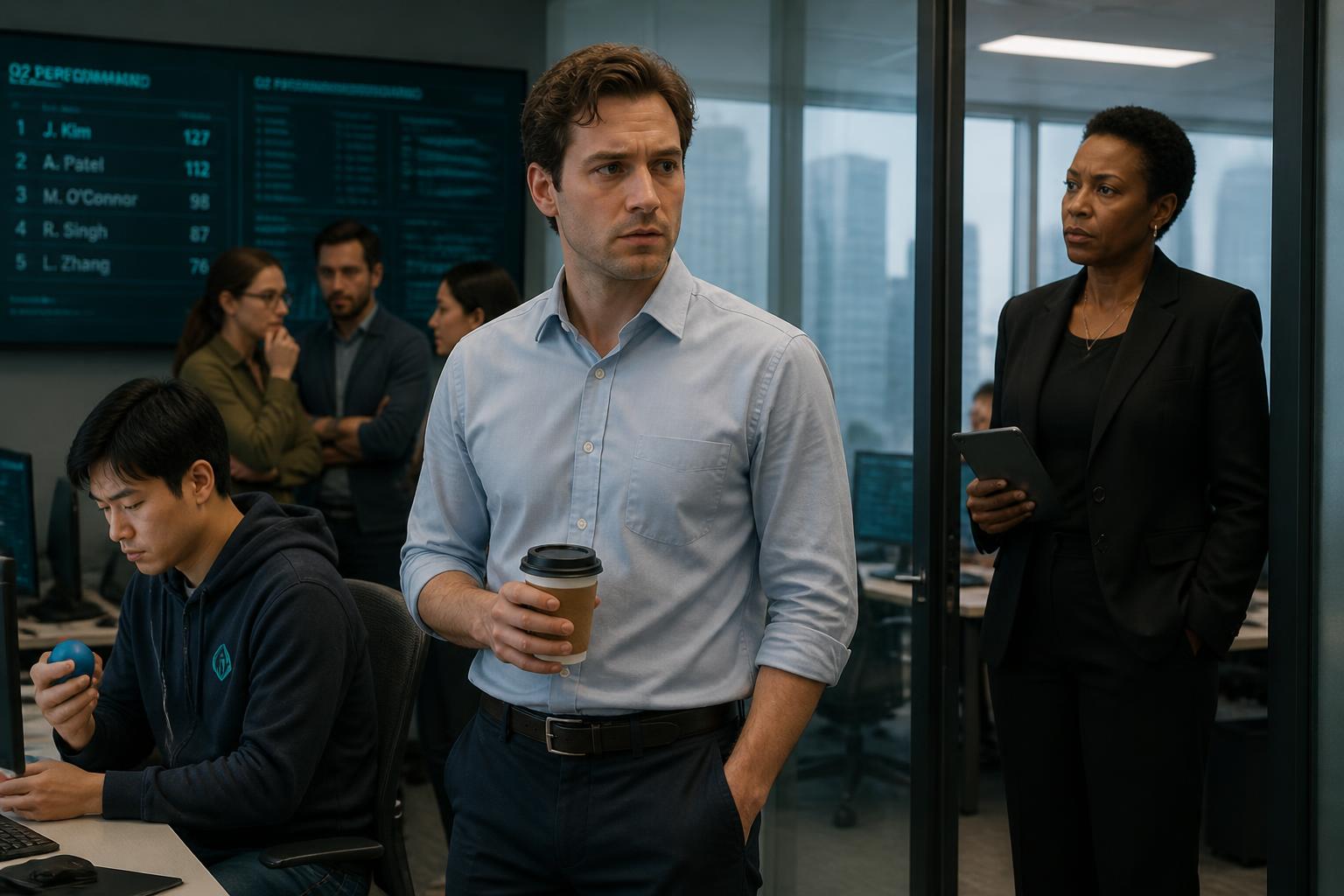
A rap at the open door startled her. Alan’s voice preceded him: “Hope I’m not interrupting.” He stepped in, all easy authority, a silvering sweep of hair flopping a bit over his brow. “Got a minute to brainstorm for Monday’s grant pitch?”
She closed her laptop, tracing a crescent with her thumbnail against the mug handle. “Sure. I was just clearing a few things.” She noticed, uncomfortably, that her heart thudded in a way it hadn’t for a while, at least not in this office. Calm down, Monica, she told herself. Alan was like this with all the senior faculty—intensely focused one minute, quick to laughter the next.
Still, as he slid a chair closer, she was acutely aware of the energy that seemed to spark when his gaze locked with hers. She smoothed a loose strand of hair behind her ear, focusing on his words: the Institute’s priorities, the need for “visionary” proposals, the way her recent Moroccan art unit had “shaken up the undergrads.” It was flattering, even if she suspected Alan laid it on thick out of habit.
Monica wished, sometimes, that such attention felt less like a visitation and more like a memory—something with its edges softened. Instead, she caught herself feeling young, exposed, hungry in a way she couldn’t quite name. All the more reason to keep things cordially professional.
A soft vibration in her tote signaled a text. She let it go. Nate would just be letting her know he’d finished with the Schaller’s bathroom tile or wanted to confirm her dinner preference—grilled chicken again, maybe. Lately, in the quiet hour after their daughter’s move to Elmira for grad school, conversation between Monica and Nate felt like trying to see through layered curtains. He was always tired from work. She, preoccupied with lectures and departmental shifts. They watched British mysteries and scrolled their phones in silence, the old jokes and easy intimacy slipping out of reach.
By the time Alan excused himself—“I’ll circle back when you’ve had a chance to mark this up?”—Monica’s nerves tingled. She pulled her attention back to the email avalanche, but his nearness lingered.
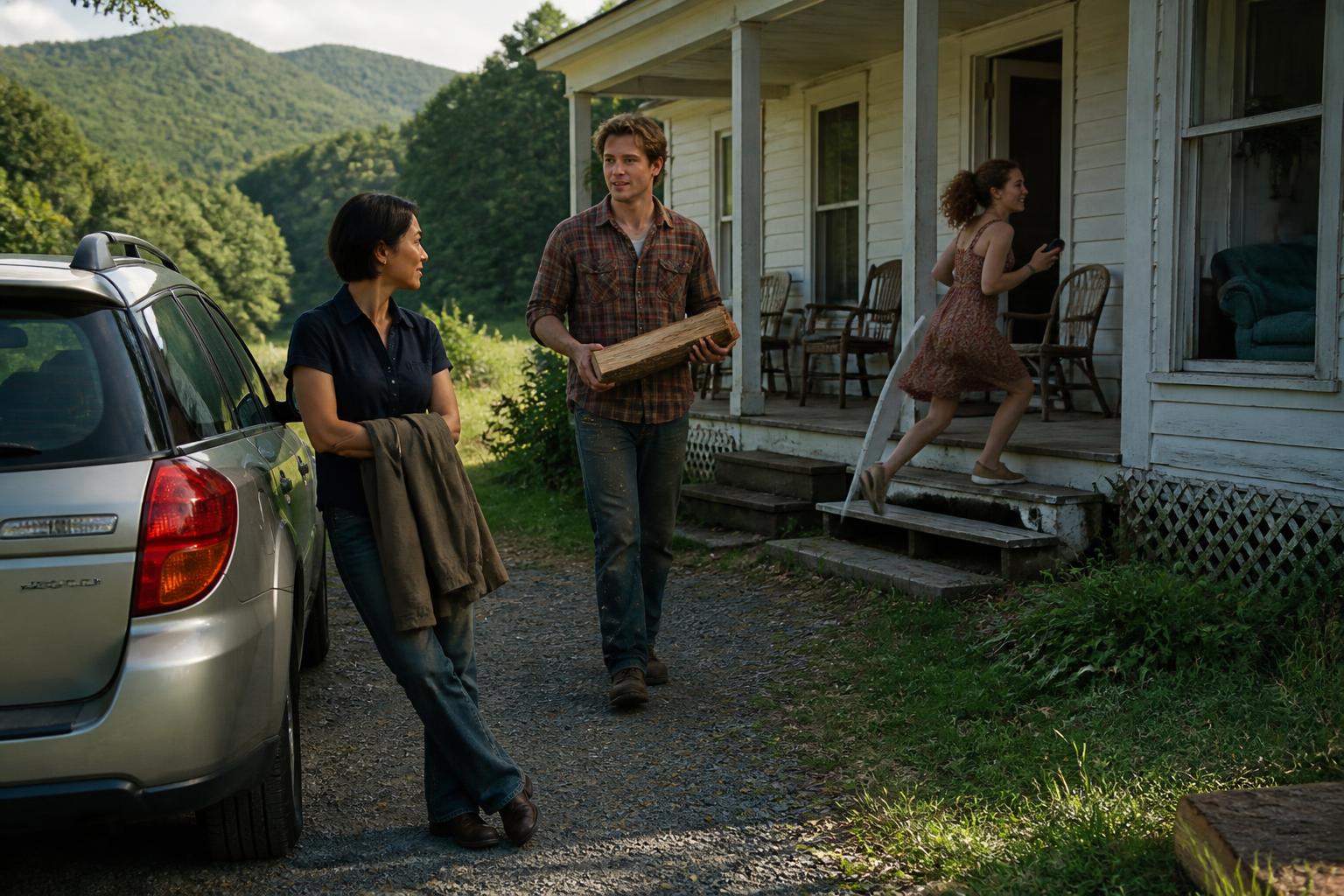
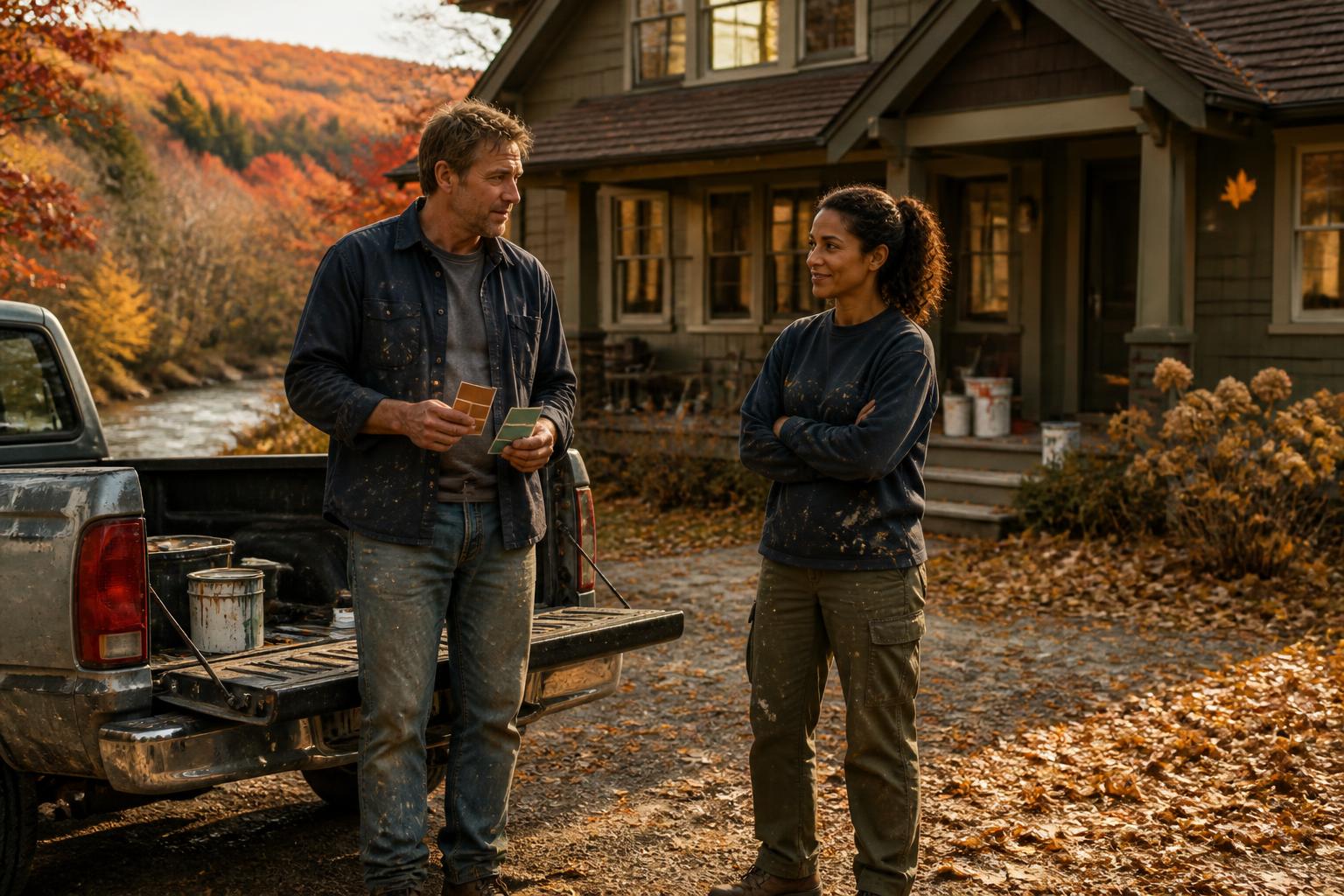
Across town, at a half-gutted Craftsman near Six Mile Creek, Nate hunched over the bed of his pickup, debating between two identical shades of white paint. “Cloud Cover or Swiss Coffee?” he said, pressing color cards at Jenna Loomis, who leaned against the porch railing, arms crossed with her customary bemused smile.
“You know they’ll both look dingy by February.” Jenna’s hair was escaping its ponytail, drywall dust smudging her cheek. “Pick the one with the least pretentious name.”
He laughed, grateful for the banter. Work had slowed the past month, clients stalling on decisions, supplies backordered. His usual optimism was fraying. Jenna sensed it, offering him her thermos of store-bought coffee—the bitter, cheap kind. “Rough morning?” she asked.
He hesitated. Jenna, recently divorced, knew how to listen without crowding. “Just… I don’t know. Monica’s so distracted, lately. It’s like she’s down the hall but miles away, you know?”
Jenna nodded, eyes tracing the line where fresh paint met battered moulding. “Transitions suck. Half the time, you don’t know if you’re stuck, or headed somewhere good.” Her words landed with a household kind of weight.
Nate shrugged. Talking about Monica—her rituals, her silences—was riskier than discussing finances or weather. But with Jenna, it felt safer. And she, perhaps, needed someone to catch her, too. For a moment they stood together in companionable silence, the city’s autumn bustle a gentle hum in the background.
By day’s end Monica lingered on campus, half her mind roiling with unfinished work, the other pulled toward thoughts she barely let surface. At home, Nate reheated leftovers. Across the living room, their conversation failed to spark. She tried to remind herself that comfort wasn’t always stagnation. But as she climbed the narrow staircase to bed, Monica couldn’t shake the feeling of a hairline crack—almost invisible, but itching wider with every day she ignored it.
The week blurred into a succession of deadlines. Monica met Alan in his office almost daily to revise their grant proposal, poring over budgets and laying out the justifications in coolly formal prose. Alan’s office, flooded with diffuse morning light and cluttered with student art, became a strange little enclave from her cluttered home life—a space where attention felt rare and deliberate. She wore her sharpest blazer the night before their submission, both conscious and embarrassed by that care.
Alan sprawled in his chair, tie loose, voice lower than in faculty meetings. “I’m genuinely excited about this. With your angle on transnational symbolism, we can outflank Yale on this RFP. I actually think we’ll win.”
His confidence both steadied Monica and made her wary. He placed a hand briefly on her forearm after a particularly tense round of revisions. “You’ve carried so much, Monica. I hope you know the department’s lucky to have someone with your fire.” She laughed it off—a practiced deflection, eyes on her notes, never quite meeting his.
Each night, she climbed into bed beside Nate, the sounds of his exhausted breathing oddly distant. He’d leave early for job sites, returning with sawdust in his hair, his voice neutral: “How was your day?” Monica’s answers grew increasingly clipped. Their texts were factual—Errand done. With Alan now. Don’t wait up. The polite distance of polite strangers. At dinner, they picked at pasta, light from the kitchen window spotlighting a growing quiet.
Nate’s frustration simmered. He caught himself listening for Monica’s car in the driveway, resenting the twitch of hope and disappointment that followed. When she finally came home, she’d sweep into the kitchen with apologies already loaded: “Sorry, Grant stuff ran late.” Her phone buzzed with Alan’s name more often. Nate never confronted her, but the suspicion pooled between them, magnifying every absence.
Jenna had noticed. She always did. She’d show up with spare coffees or pie from Ithaca Bakery, nudging Nate into laughter—at clients’ weird requests, at inept subcontractors, even at his own mistakes. On Friday, after a long day spent fitting new windows at the Van Pelt house, Jenna dropped a slice of pecan pie onto the truck bed and cocked her head. “You all right, Nate?”
He hesitated, then sighed. “I’m just… tired, Jen. Feels like Mon’s on another planet lately.” There was that raw note in his voice he didn’t show anyone else.
Jenna shrugged, scanning the fading light on the hills. “World gets smaller after divorce. You start noticing who doesn’t leave.” She sounded like she wasn’t offering advice, but her closeness was steadying. Nate found himself telling her things he used to reserve for Monica—about how he feared getting left behind, how sometimes he felt invisible in his own house.
On Saturday morning, Monica saw the date circled in her planner: 20th Wedding Anniversary—Dinner at Simeon’s, 7pm. She’d suggested it weeks ago; it felt, by then, almost theoretical. Guilt tugged at her as Alan’s reminder for an urgent grant dinner flashed on her screen—major donor in town, Alan insisted it would make a difference. He assured her it was short notice for everyone and wouldn’t happen again soon.
She dialed home. Nate answered on the third ring. His tone was brittle the second he heard her apology: “So—you can’t make dinner. For our anniversary.”
“Nate, it’s only this one night. The grant could change everything. I—”
“You always have a reason, Monica,” he cut in. In the silence that followed she heard his jaw clench, heard their history reshuffling, restless in his mind.
“I’m sorry,” she tried, already knowing it sounded hollow. “I’ll be late, but I’ll make it up to you.”
Nate hung up quietly. Across town, Jenna was cleaning paint rollers in the fading light when Nate pulled up. “You hungry?” he asked, voice tight. She nodded, wordless, as he gestured toward the Diner on Elm street. For once, Jenna didn’t make a joke; she just walked beside him down the cracked sidewalk, the early autumn air sharp with possibility and the pain of unspoken things.
Alan booked the table at Le Café DeWitt, not Simeon’s, his message as airy as always: “They make an honest cassoulet and the donor loves French. Save me a seat?” Monica lingered in her office after dusk, the streetlights painting the gothic archways honey-gold. Her heels clicked along the empty corridors, each footfall underscoring the cost of her absence from home. She texted Nate—Delays. Don’t wait up—before she let herself acknowledge the familiar churn in her stomach.
The dinner itself passed in a haze. Alan held court, reciting plans and ambitions, and Monica smiled and nodded at the right moments. After dessert, as the donor’s Uber rolled away, Alan lingered outside with her beneath the greenish glow of the entry light. He stepped closer, words tumbling together. “You’re the linchpin, Monica. You know that? We wouldn’t have a shot at this without you.”
She felt the urge to draw back, to formalize the growing warmth between them. That’s when Alan’s hand reached for hers, his thumb tracing the top of her knuckles—a gesture intimate, reckless, unmistakably charged. “I know this is out of line,” he ventured, “but sometimes I forget myself around you.”
For a beat, Monica didn’t move. Then she pulled her hand away, voice a whisper. “Alan, don’t. Please.” She heard the old version of herself—confident, certain—rise up against the undercurrent of yearning. The moment stretched. Alan sheepishly stepped back, regret flashing in his eyes. “I’m sorry. That’s on me.”
Monica made her way to her car, shame grafted onto relief. She turned the radio loud, letting the drive home erase the awkwardness, or at least mute its edges. Yet later, brushing her teeth, she replayed Alan’s words and the ease with which her resistance had almost faltered. She crawled into bed beside Nate, who was asleep with the TV on—she didn’t need to check what he’d been watching.
Morning broke with a crystalline chill off the lake. Monica’s mind buzzed with second-guessing. Her phone chimed with faculty emails, but also with a string of unread texts from Alan: a clumsy apology, a request to keep “work strictly work,” and one note of gratitude for her professionalism. Monica deleted them all, fingers trembling.
She left for campus early—a need to stay in motion. At the crosswalk near Cascadilla Gorge, brittle leaves skittered around her sneakers. She realized with a pang that she’d almost looked forward to Alan’s voice that day, and now dreaded it. She wondered—was this how the cracks always started? Not from grand betrayals, but from small capitulations, tiny betrayals of intention?
Meanwhile, Nate spent Saturday buried in work, tearing up a warped subfloor with an intensity that surprised even him. Jenna arrived mid-morning, two coffees in hand, the sleeves of her sweatshirt already spattered with primer. “Did you sleep at all?” she asked, eyebrow arched.
He tried to laugh it off. “Not much point.” Then, in a rare slip, he let bitterness edge out: “Monica had some department crisis. Again.”
They worked side by side until dusk. When the tools were stowed and the work site was quiet, Jenna offered to split a pizza at her place. He almost said no, but the prospect of another solitary night gnawed at him.
Jenna’s small rental above a flower shop was a patchwork of color and warmth: battered furniture, stacks of design magazines, a dog-eared edition of Persuasion on the coffee table. They ate on the floor, knees nearly touching. Jenna poured two glasses of cheap red, her tone lighter than her eyes. When Nate spoke, the words came haltingly—more open than he’d allowed himself in months.
“I thought… I thought about leaving last night,” he admitted. “Monica, I mean. It would’ve been easier. Instead I just…” He shook his head. Jenna waited—not prying, just there. There was a closeness, but neither crossed a line. Instead, he leaned back, breathing deep. “I almost crossed one, though. Some days it’s the only thing I don’t regret.”
A silence built, gentle and sore. Jenna pressed her hand over his, giving it a squeeze. “You didn’t, though. That’s something, Nate.”
Lying in bed later, Monica’s thoughts warred between pride and disappointment. Sunday dawned gray and restless. As she scrolled through her calendar, a new message flashed from Jenna’s number—an accidental group text meant for Nate: Last night was hard, but I’m glad we… didn’t go there. Hang in there, friend. Monica read it three times, confusion and dread swimming into focus. Nate, who’d always been the sure bet. Jenna, whose laughter she’d always trusted. The crack, at last, no longer hairline but wide enough for everything to fall through.
The shock of that stray text lingered all morning. Monica brought it to her lips, mind cycling furiously: the unspoken, the nearly-happened, and worse—the silent desire. Suddenly it wasn’t Alan or opportunity that haunted her, but a pain both nearer and deeper: she and Nate had maintained their vows in letter, but let so much else wither in the quiet between them.
By noon, she couldn’t work. In her office, the December sun streamed indifferent across her keyboard. Staring out, Monica understood that pretending nothing had changed would dissolve them for good. She texted Nate—Can we talk tonight? Really talk?—and canceled her meetings for the rest of the afternoon.
At home, she found Nate in the kitchen rinsing out his thermos. He looked so tired, older somehow. For a moment, neither spoke. Monica set her bag down and gestured to the table, voice hoarse. “I think we should talk, Nate. About… everything.”
He nodded, pulling out a chair. She sat across from him, hands clasped tight to hide the trembling. “I saw the message from Jenna,” she admitted, anguish wringing her words. “You didn’t do anything wrong. But it felt—like finding out how lonely we’ve both let ourselves get. And what we almost became willing to lose.”
Nate's shoulders slackened. “I didn’t sleep with her, Monica. I thought about it—God, I really did. But it wasn’t about her. It was about how empty I’d started feeling inside us. I hate that I let it get that far.”
The room was so quiet, she could hear a dog barking blocks away. Monica’s own admission pressed against her chest. “Alan crossed a line with me. I let myself get carried away by it—by the idea someone saw me, hung on every word. I kissed the attention but not the man. But even then, I felt ashamed. I hated how much I missed feeling wanted.”
Nate drew a ragged breath. “Guess we’re both good at building things for everyone but ourselves, huh?” His laugh was brittle, but not unkind.
Monica nodded, trying to blink away the sting in her eyes. “I don’t know if we can fix this, Nate. I think I need some space to figure out how—how not to bury myself in work or old habits. It’s not your fault. It’s not Jenna’s, either. This is us.”
He nodded, voice thick. “Do you want me to move out?”
She shook her head. “No—I think I should go. At least for a while. Let’s try counseling. If there’s still a bridge to build, I want to know we chose the work. Not just the routine.”
The decision solidified between them: Monica would stay with a friend from campus. That night, she packed a week’s worth of clothes into a duffel. As she zipped it closed, her hand brushed the old anniversary photo Nate had tucked into her drawer—two bodies leaning into each other, hair mussed by wind on Stewart Park pier, faces bright with the simplicity of then.
Before leaving, Monica found Nate on the porch, breath fogging in the starlit chill. Without words, she sat beside him. “I’ll call you tomorrow,” she told him. He nodded, gaze tracing the empty street. A parting: not as punishment, but as a space to see if anything true remained between them.
Autumn deepened. Monica threw herself into teaching, then therapy, learning to listen to her own voice, not just the needs clamoring around her. Nate kept working with Jenna—friendly, but gentler. Slowly, he learned small gratitude for the patterned, imperfect life he still had. Both discovered how much forgiveness could ask—never forgetting, never completely erasing—but how it unexpectedly seeded hope.
Six weeks later, Monica returned—not sure the hurt was gone, but sure she wanted to try again. She pressed her keys into Nate’s palm. He stood in the kitchen, arms crossed, nervous as he’d looked on their wedding day. She set her duffel down, breathing deep.
“Let’s not pretend, Nate. Let’s just begin where we are.”
No declarations, just a held gaze, and—slowly—the sense that even the flawed can be worth tending. Outside, the gorges glowed with the last fire of the season; inside, Monica and Nate sat side by side at the scarred kitchen table, beginning again, quietly, with hope.